Alma Dal Co Memorial Lecture: Team Bacteria versus Team Phage
About this Event
33 Oxford Street, Cambridge, MA 02138
Abstract:
Bacteria and the viruses that infect them, known as phages, are locked in a continual evolutionary competition. In this talk, I will present three stories illustrating the surprisingly sophisticated strategies used by both sides. First, we will see how bacteria can learn about danger from their fallen comrades: when cells are killed and burst open, they release a small molecule that serves as a “death signal” to warn their neighbors of impending attack. Second, dead bacteria can continue to influence the battle. The debris left behind by lysed cells can strongly absorb phages, effectively removing them from circulation. We have found that mechanisms known as superinfection exclusion, which protect infected bacteria from additional infections by the same phage, can importantly also prevent cell debris from absorbing those phages. Finally, I’ll turn to the information available to phages themselves. Temperate phages can either kill their host or remain quietly inside it, and this decision can depend on how many phages are infecting a cell and on chemical “quorum-sensing” signals reporting the abundance of nearby bacteria. Using neural networks and automatic differentiation to discover optimized phage strategies, we uncover some surprising answers about when information helps—and when it does not.
Bio:
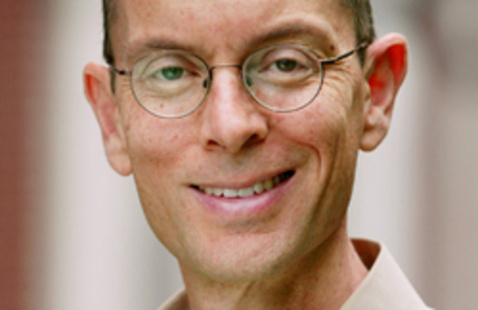
Ned Wingreen received his Ph. D. in theoretical condensed matter physics from Cornell University in 1989. He did his postdoc in mesoscopic physics at MIT before moving, in 1991, to the newly founded NEC Research Institute in Princeton. At NEC, he continued to work in mesoscopic physics, but also started research on the statistical mechanics of protein folding. Thinking about proteins led him inexorably down the path into biology. During a sabbatical at UC Berkeley in 1999, his primary focus shifted to systems biology of bacteria. Wingreen joined Princeton University as a Professor of Molecular Biology in 2004, with a joint appointment in the Lewis-Sigler Institute as of 2008. Wingreen's current research focuses on modeling the biophysics of bacteria and their viruses (phage), intracellular phase separation, and, most recently, immunology.
For more information on Alma and the Alma Dal Co Foundation ETS, visit https://almadalcofondazione.org/
Event Details
See Who Is Interested
0 people are interested in this event
User Activity
No recent activity